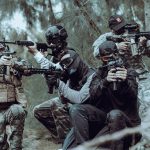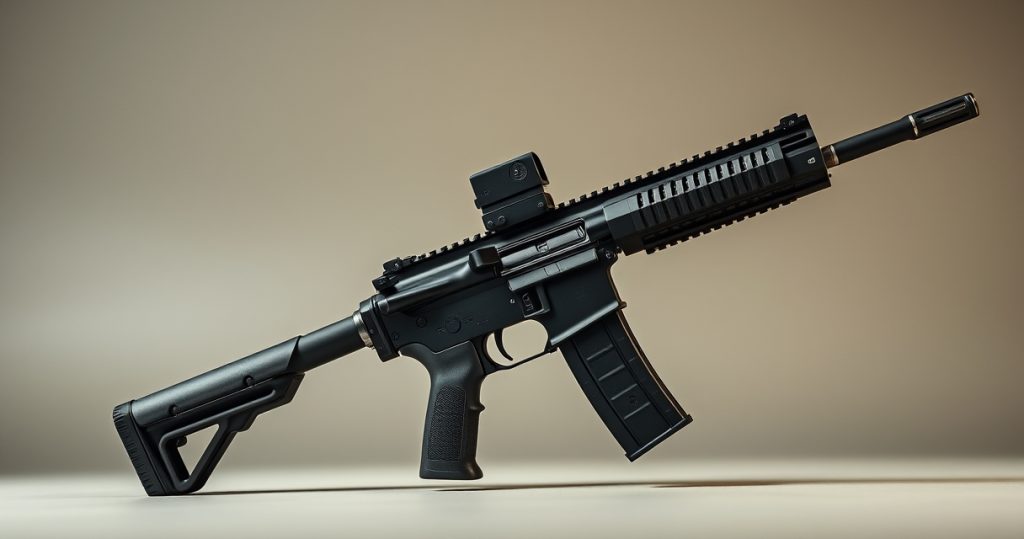
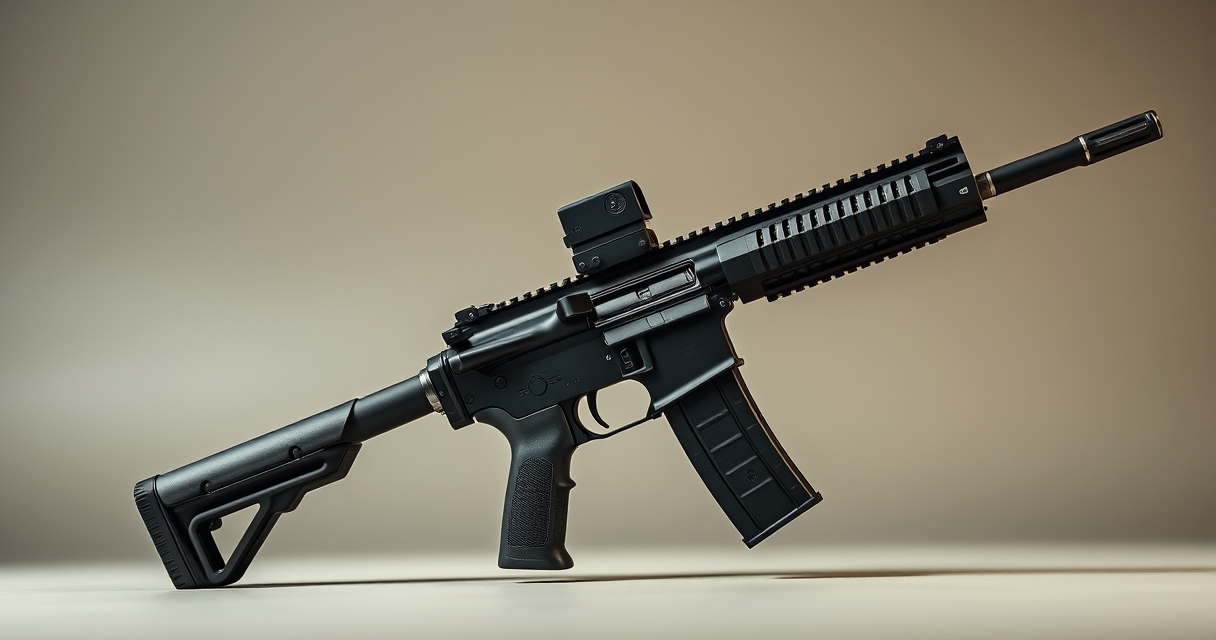
Airsoft and paintball occupy the same tactical training space, yet Indoor vs Outdoor Airsoft games serve missions. Both systems let shooters engage in force-on-force drills without live ammunition, yet the hardware, ballistics, and rules of engagement diverge sharply. Airsoft rifles replicate military carbines down to the selector switch and Picatinny rails, while paintball markers prioritize rate of fire and paint volume over realism. Choosing between the two is not about preference alone; it is about matching the weapon system to the tactical objective, whether that is close-quarters battle rehearsal or high-tempo scenario play.
Mechanical Design and Realism in Airsoft vs Paintball Replicas
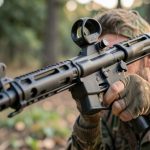
Airsoft guns, including Airsoft Rifles, are built to mirror actual firearms in form and function. A Tokyo Marui M4A1, for example, uses a gearbox that cycles a piston against a spring to propel 6 mm plastic BBs at 300 to 400 feet per second. The receiver is milled from aluminum or polymer to match the weight and balance of an AR-15, and the trigger pull mimics the two-stage military trigger. External controls such as the charging handle, magazine release, and safety selector are placed exactly where they appear on the real rifle, allowing shooters to develop muscle memory that transfers directly to live-fire training.
Paintball markers, in contrast, are optimized for paint delivery rather than realism. A Dye Rize CZR uses a spool valve that vents air through a bolt, launching .68 caliber gelatin capsules at 280 to 300 feet per second. The body is a single molded shell with minimal external controls; the trigger is a simple electronic microswitch that fires as fast as the board allows, often 20 to 30 balls per second. While some high-end markers like the Planet Eclipse CS3 offer adjustable regulators and quick-release barrels, they still lack the ergonomic fidelity of an airsoft replica, making them less suitable for weapon manipulation drills.
Military and law enforcement units that run airsoft for CQB training cite the identical manual of arms as the primary advantage. A Marine who clears a room with an airsoft M4 can transition to a live rifle without relearning grip, stance, or reload sequence. Paintball, with its open bolt design and lack of a reciprocating charging handle, cannot replicate that level of procedural fidelity.
Ballistic Performance and Terminal Effects on Target
Airsoft BBs are spherical plastic pellets weighing 0.20–0.30 grams, reflecting Airsoft Gun spring ratings. At 350 feet per second, a 0.25 g BB carries approximately 1.1 foot-pounds of energy, enough to sting bare skin but not penetrate clothing. The trajectory is flat over short ranges, typically 50 to 75 feet, beyond which the lightweight projectile loses velocity quickly. Wind drift becomes noticeable at 100 feet, requiring shooters to compensate with Kentucky windage or hold-over. Because the BB is solid, it does not leave a visible mark on impact, so hit detection relies on an honor system or electronic sensors that register the sound of the BB striking gear.
Paintballs are .68 caliber gelatin spheres filled with non-toxic, water-soluble dye. A standard paintball weighs 3.2 grams and exits the barrel at 280 feet per second, delivering about 12.5 foot-pounds of energy at the muzzle. The heavier mass and larger diameter create a pronounced ballistic arc; at 50 feet, the ball drops approximately 18 inches, forcing players to adjust aim or use a high-angle lob. On impact, the gelatin shell ruptures, leaving a visible splatter that eliminates the need for electronic hit detection. The trade-off is that paintballs can break inside the barrel or feed neck, causing jams, whereas airsoft BBs rarely malfunction, unlike LiPo vs NiMH batteries for Airsoft.
For tactical training, the choice hinges on the desired terminal effect. Airsoft allows repeated engagement without cleanup, making it ideal for multi-day exercises where resupply is limited. Paintball provides instant feedback and forces shooters to account for ballistic drop, a skill that translates directly to live-fire marksmanship with rifle grenades or indirect fire weapons.
Ammunition Capacity and Logistics in Extended Engagements
Airsoft magazines replicate real firearm capacities, showing Airsoft FPS limits. A standard M4 mid-cap magazine holds 120 to 150 BBs, while a high-capacity drum can store 2 500 to 3 000 rounds. The magazines are spring-loaded, requiring the shooter to wind a wheel or pull a string to feed BBs into the hop-up unit. Reloading is a manual process that mimics the tactical reload of a live rifle; the shooter ejects the spent magazine, inserts a fresh one, and charges the bolt. Because BBs are lightweight and compact, a shooter can carry 10 to 15 magazines on a plate carrier, enough for several hours of continuous play without resupply.
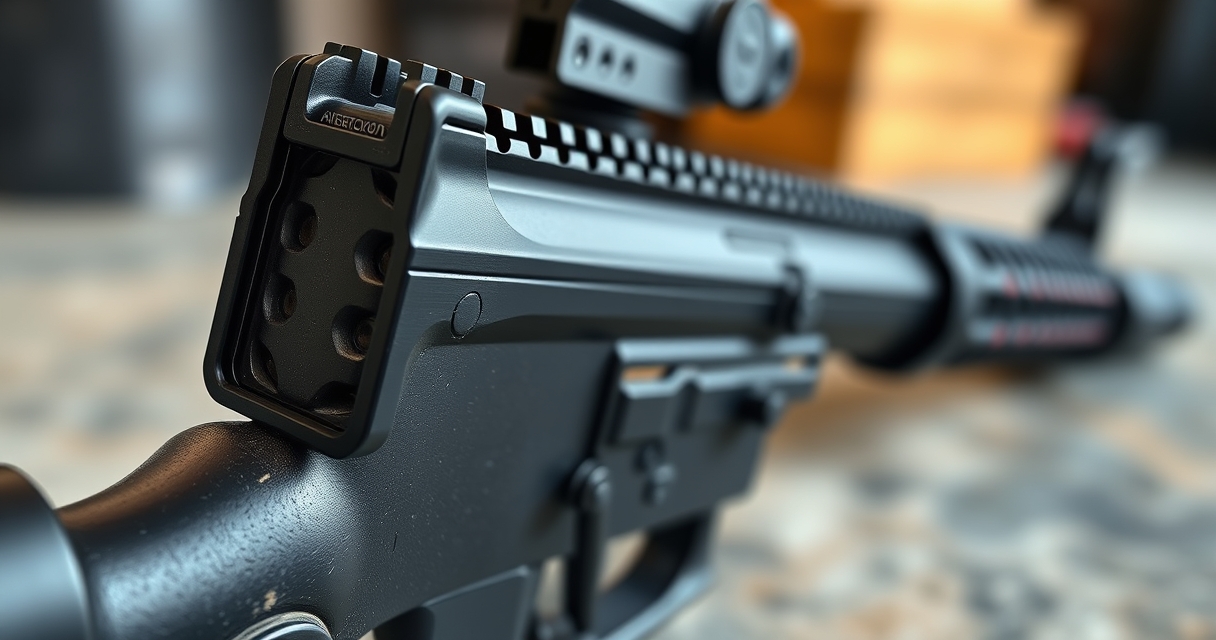
Paintball hoppers, or loaders, sit on top of the marker and gravity-feed balls into the breech. A standard hopper holds 200 paintballs, while a high-capacity loader like the Dye Rotor R2 can accommodate 300 to 400. Electronic loaders use a motor to agitate the balls, preventing jams and allowing rates of fire up to 30 balls per second. However, the larger size and weight of paintballs mean that a player can realistically carry only 3 to 4 hoppers on a harness, limiting sustained fire to 800 to 1 200 rounds before requiring a resupply. The logistics of paintball also include cleaning; ruptured balls leave residue that can clog the barrel and feed system, necessitating frequent wipe-downs with a squeegee or barrel swab.
In large-scale force-on-force exercises, airsoft offers superior endurance. A squad can operate for an entire weekend on a single case of BBs, whereas a paintball team may need to halt play every 30 to 45 minutes to refill hoppers and clean markers. The reduced logistical footprint makes airsoft the preferred choice for multi-day training events where resupply points are distant or nonexistent.
Safety Gear and Injury Mitigation Protocols
Airsoft safety gear protects eyes and face, supporting Airsoft Optics. Full-seal ANSI Z87.1-rated goggles are mandatory, and most fields require a lower face mask that covers the mouth and cheeks. The reason is straightforward; at close range, a 0.25 g BB can fracture teeth or lacerate skin. Some players add a mesh mask or a hard plastic face shield for additional protection, especially in CQB environments where engagement distances drop below 20 feet. Beyond the face, players typically wear long sleeves and gloves to prevent welts on exposed skin. The gear is lightweight and breathable, allowing for extended wear during multi-hour scenarios without overheating.
Paintball safety gear prioritizes impact absorption over breathability. A paintball traveling at 280 feet per second can leave a bruise the size of a quarter, so players wear thick padded jerseys, chest protectors, and padded pants. The primary concern is the torso and limbs, where a direct hit can cause subcutaneous bleeding. Full-face masks with thermal lenses are standard; the lens prevents fogging, and the padding absorbs the shock of a paintball striking the forehead or jaw. Some masks, like the Virtue VIO Ascend, include a built-in fan to improve airflow, but even with ventilation, players report heat exhaustion during summer games in temperatures above 85 degrees Fahrenheit.
Field rules reflect the different injury profiles. Airsoft fields enforce minimum engagement distances, typically 10 to 15 feet, to prevent eye injuries from close-range shots. Paintball fields, by contrast, allow point-blank engagements but require players to call themselves out if hit anywhere on the body, including gear. The stricter paintball rules are a direct response to the higher energy transfer of a paintball impact, which can cause injury even through clothing.
Cost of Entry and Long-Term Ownership Economics
The initial cost of an airsoft setup varies widely depending on realism and performance. A basic spring-powered pistol costs 20 to 50 dollars, while a high-end electric rifle like the VFC Avalon VR16 Saber CQB can exceed 400 dollars. Magazines add to the expense; a single mid-cap magazine runs 15 to 25 dollars, and a high-capacity drum can cost 50 to 80 dollars. BBs are inexpensive, with a 5 000-round bag of 0.25 g BBs priced at 10 to 15 dollars. Over time, the primary recurring cost is battery replacement; a 7.4 V LiPo battery lasts 2 000 to 3 000 rounds and costs 20 to 30 dollars. Maintenance is minimal; a gearbox rebuild kit costs 30 to 50 dollars and is needed only after 50 000 to 100 000 rounds.
Paintball markers start at a higher price point. An entry-level mechanical marker like the Tippmann Cronus costs 100 to 150 dollars, while a high-end electronic marker such as the Planet Eclipse Etha 3 retails for 600 to 800 dollars. Hoppers add 50 to 150 dollars, and a tank of compressed air or CO2 runs 50 to 200 dollars depending on capacity. The largest ongoing expense is paint; a case of 2 000 paintballs costs 50 to 80 dollars, and a player can expend 500 to 1 000 balls in a single day of play. Maintenance is more labor-intensive; markers require regular lubrication of the bolt and o-rings, and barrels must be cleaned after every 500 to 1 000 rounds to prevent jams. A full rebuild kit for a Planet Eclipse marker costs 40 to 60 dollars and is recommended every 10 000 to 15 000 rounds.
For budget-conscious shooters, airsoft offers a lower total cost of ownership. A player can outfit themselves with a rifle, three magazines, a battery, and 10 000 BBs for under 300 dollars, whereas a comparable paintball setup with a marker, hopper, tank, and 2 000 paintballs exceeds 500 dollars. The difference becomes more pronounced over time; a year of weekly airsoft play may cost 200 to 300 dollars in BBs and batteries, while the same schedule for paintball can run 1 000 to 1 500 dollars in paint and maintenance.
Tactical Applications and Training Value for Military and Law Enforcement
Military units use airsoft for force-on-force training because the replicas allow shooters to practice weapon handling, movement, and communication with the same gear they would use in combat. An airsoft M4 with a PEQ-15 laser and holographic sight lets a soldier zero the optic, practice magazine changes, and engage targets with the same sight picture as a live rifle. The lack of recoil is a limitation, but the trade-off is that soldiers can conduct hundreds of repetitions without the cost or noise of live ammunition. The Marine Corps, for example, runs airsoft-based close-quarters battle courses at Twentynine Palms, where squads clear buildings with Simunition marking cartridges and airsoft rifles to simulate different threat levels.
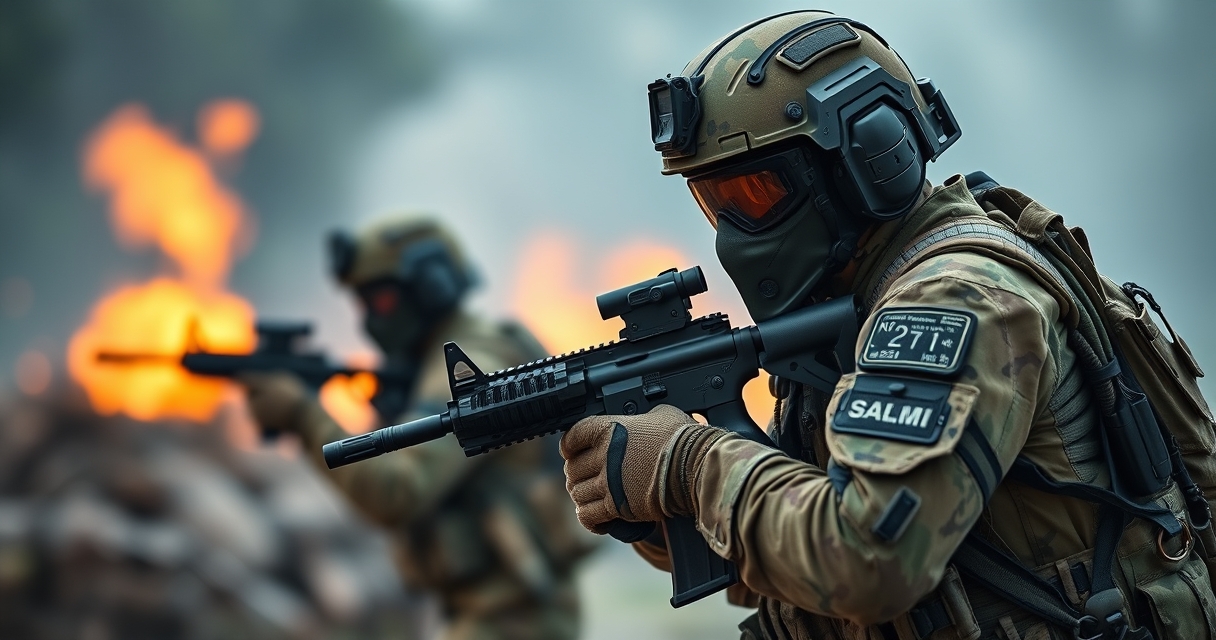
Paintball is less common in military training but is used for scenario-based exercises where the goal is to simulate high-volume fire rather than precise marksmanship. The U.S. Army has employed paintball in MOUT facilities to teach room-clearing techniques, using the paint splatter to indicate hits and force players to react to being engaged. The advantage is that paintball provides immediate feedback; a hit is visible, and the player must physically exit the engagement area. The disadvantage is that the marker does not replicate the weight, balance, or manual of arms of a service rifle, making it less effective for weapon manipulation drills.
Law enforcement agencies favor airsoft for active shooter response training. A SWAT team can run a full-scale exercise in an office building using airsoft rifles and pistols, with role players acting as suspects and hostages. The realism of the replicas allows officers to practice dynamic entry, breaching, and target discrimination without the risk of live fire. Paintball is occasionally used for less lethal training, such as crowd control simulations, where the goal is to mark agitators without causing injury. However, the lack of realism in the marker design limits its usefulness for firearms training.
Field Rules and Gameplay Dynamics in Competitive Play
Airsoft fields enforce rules that prioritize realism and safety. Most fields use a hit-and-call system; when a BB strikes a player, they must raise their hand and shout “hit,” then move to a designated respawn point. Some fields use electronic hit detection systems, such as the Tippmann MILES gear, which emits an audible tone when a BB strikes a sensor. Engagement distances are strictly enforced; players must call “bang” or use a secondary weapon if they are within 10 to 15 feet of an opponent. Game modes vary from capture the flag to large-scale milsim events that last 24 to 48 hours, with players operating in squads and using radios for coordination.
Paintball fields focus on speed and visibility. The primary rule is that any paint splatter on a player or their gear counts as a hit, and the player must immediately exit the field. Most fields use a dead box system, where eliminated players gather until the next round begins. Engagement distances are not enforced; players can shoot at point-blank range, and the high rate of fire encourages aggressive play. Game modes include speedball, where teams compete on a symmetrical field with inflatable bunkers, and woodsball, which uses natural terrain and longer engagement distances. The emphasis on paint visibility means that players wear bright jerseys and often use brightly colored markers to stand out on the field.
The choice between airsoft and paintball for competitive play depends on the desired experience. Airsoft appeals to players who want a tactical, immersive environment with realistic weapons and team-based objectives. Paintball attracts those who prefer fast-paced, high-energy games where the goal is to eliminate opponents quickly and decisively. Both systems have organized leagues; the National Xball League governs professional paintball, while the Airsoft International League oversees competitive airsoft events. The rules and field layouts reflect the strengths of each system, with airsoft favoring strategy and paintball favoring speed.

I’ve been drawn to the world of firearms and edged weapons ever since I first visited a local shooting range as a teen. I love exploring the history, technology, and responsible use of these tools, and I enjoy sharing insights with fellow enthusiasts.