Precision is the backbone of every tactical engagement, and in airsoft, that precision begins with velocity. Whether you’re fine-tuning a high-performance sniper rifle or ensuring your CQB carbine stays within field limits, an airsoft chronograph is the indispensable tool that bridges the gap between guesswork and measurable performance. Without it, you’re left relying on manufacturer claims, forum hearsay, or the unreliable “feel” of a BB’s trajectory—none of which hold up under the scrutiny of competitive play or safety regulations. This guide demystifies the chronograph, breaking down its mechanics, applications, and best practices so you can wield it with the same confidence as your primary weapon.
What Is an Airsoft Chronograph and Why Does It Matter?
An airsoft chronograph is a specialized electronic device designed to measure the muzzle velocity of a BB as it exits the barrel of an airsoft gun. Unlike traditional chronographs used in firearms, which often rely on optical sensors to track supersonic projectiles, airsoft chronographs are calibrated for the subsonic speeds typical of 6mm plastic BBs—usually ranging from 200 to 600 feet per second (FPS). The device works by detecting the BB as it passes through two or more sensor gates, calculating the time it takes to travel between them, and converting that data into velocity.
The importance of a chronograph in airsoft cannot be overstated. Most organized fields enforce strict FPS limits to ensure player safety, with penalties ranging from mandatory downgrades to outright bans for non-compliance. For example, a standard M4 carbine might be restricted to 350 FPS with 0.20g BBs, while a sniper rifle could be capped at 500 FPS with 0.30g BBs. Without a chronograph, verifying these limits is impossible, leaving you vulnerable to disqualification or, worse, causing unintended injury to other players. Beyond compliance, chronographs are essential for performance tuning, allowing you to optimize spring tension, gas pressure, or battery voltage for consistent shot-to-shot velocity.
How a Chronograph Measures Velocity: The Science Behind the Numbers
The core principle of a chronograph is rooted in basic physics: velocity equals distance divided by time. Most airsoft chronographs use a pair of optical sensors spaced a precise distance apart—typically 4 to 6 inches. When a BB passes through the first sensor, it triggers a timer; when it reaches the second sensor, the timer stops. The device then divides the known distance between the sensors by the elapsed time to calculate the BB’s speed in FPS or meters per second (MPS). For example, if the sensors are 5 inches apart and the BB takes 0.001 seconds to travel that distance, the chronograph calculates the velocity as 5,000 inches per second, or roughly 416 FPS.
Modern chronographs often include additional features to enhance accuracy. Some models use infrared sensors instead of visible light to reduce interference from ambient conditions, while others incorporate multiple sensor pairs to average readings and minimize errors. High-end units may even display standard deviation, helping you identify inconsistencies in your gun’s performance. It’s worth noting that chronographs are sensitive to environmental factors like wind, temperature, and BB quality. A gust of wind or a poorly polished BB can skew readings, so always take multiple measurements in controlled conditions to ensure reliability.
Choosing the Right Chronograph for Your Airsoft Arsenal
Not all chronographs are created equal, and selecting the right one depends on your specific needs. For casual players, a basic handheld unit like the Competition Electronics ProChrono Digital may suffice, offering portability and ease of use at an affordable price. These models typically feature a single sensor pair and a backlit display for quick readings. However, if you’re a tech-savvy enthusiast or a competitive player, you might opt for a more advanced unit like the Xcortech X3200, which includes Bluetooth connectivity, data logging, and compatibility with heavier BBs up to 0.40g.
For those on a budget, DIY solutions like PC-based chronographs can be an attractive alternative. Using a pair of infrared sensors connected to a computer’s sound card, you can build a functional chronograph for a fraction of the cost of commercial models. While these setups require some technical know-how, they offer unparalleled customization, such as the ability to log data over time or integrate with ballistic calculators. On the other end of the spectrum, professional-grade chronographs like the MagnetoSpeed V3 are designed for precision tuning, featuring magnetic mounting systems that attach directly to the barrel for consistent alignment. When choosing a chronograph, consider factors like sensor accuracy, ease of calibration, and compatibility with your preferred BB weights.
Step-by-Step Guide to Chronographing Your Airsoft Gun
Chronographing an airsoft gun is a straightforward process, but attention to detail is critical for accurate results. Begin by setting up the chronograph on a stable surface, ensuring the sensors are level and aligned with the barrel of your gun. Most units come with a tripod or mounting bracket for this purpose. Next, load your magazine with the same BBs you intend to use in the field—consistency in BB weight and quality is essential, as even minor variations can affect velocity readings. Before taking measurements, fire a few “warm-up” shots to stabilize the gun’s internal components, especially if it’s a gas-powered or spring-driven model.
Once the gun is ready, position it so the muzzle is 6 to 12 inches from the first sensor. Fire a single shot, allowing the chronograph to record the velocity. Repeat this process at least 5 to 10 times, noting any fluctuations in the readings. If the velocities vary significantly, check for potential issues like inconsistent BBs, worn internals, or misaligned sensors. For gas-powered guns, take readings at different temperatures to account for pressure fluctuations. Finally, average the results to determine your gun’s true FPS. If the average exceeds field limits, you’ll need to adjust your setup—whether by downgrading the spring, reducing gas pressure, or switching to a lighter BB weight.
Common Mistakes and How to Avoid Them
Even experienced players can fall victim to common chronographing pitfalls. One of the most frequent errors is failing to account for BB weight. A gun chronographed with 0.20g BBs will register a higher FPS than the same gun tested with 0.25g BBs, simply because lighter BBs accelerate faster. Always use the BB weight specified by your field’s rules to ensure compliance. Another mistake is neglecting environmental conditions. Wind, humidity, and temperature can all influence velocity, so conduct tests in a sheltered area and note the conditions for future reference.
Misalignment is another common issue. If the chronograph’s sensors aren’t perfectly parallel to the barrel, BBs may pass through at an angle, skewing the results. Double-check the alignment before each session, and consider using a laser bore sight to verify accuracy. Additionally, avoid “dry-firing” the chronograph—firing without BBs can damage the sensors or produce false readings. Finally, don’t rely on a single shot to determine your gun’s performance. Fluctuations are normal, especially in gas-powered guns, so always take multiple readings and average them for a true representation of your gun’s velocity.
Advanced Techniques: Using Chronograph Data for Performance Tuning
A chronograph isn’t just a compliance tool—it’s a gateway to optimizing your airsoft gun’s performance. By analyzing velocity data, you can fine-tune your setup for maximum efficiency. For example, if your AEG’s FPS drops significantly after prolonged use, it may indicate a weak battery or a worn spring. Conversely, if the velocity spikes erratically, it could signal a problem with the gearbox or piston. High-end chronographs with data-logging capabilities allow you to track these trends over time, helping you identify patterns and make informed adjustments.
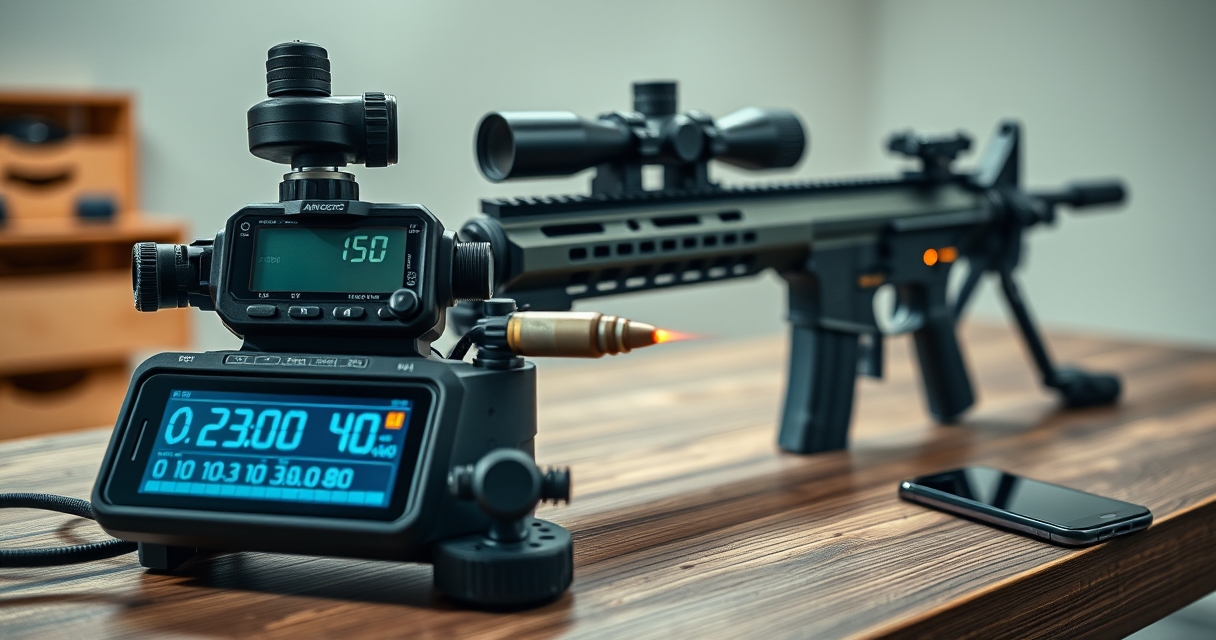
For precision shooters, chronograph data can be used in conjunction with ballistic calculators to predict BB trajectory. By inputting your gun’s FPS, BB weight, and environmental conditions, you can determine the optimal hop-up setting for long-range engagements. Some chronographs even integrate with smartphone apps, providing real-time ballistic solutions on the field. Another advanced technique is “velocity mapping,” where you test your gun at different power levels (e.g., varying spring tensions or gas pressures) to find the sweet spot between performance and reliability. This is particularly useful for DMR builds, where consistency is key to hitting distant targets.
Maintaining Your Chronograph for Long-Term Accuracy
Like any precision instrument, a chronograph requires regular maintenance to ensure accurate readings. Start by keeping the sensors clean—dust, oil, or BB residue can obstruct the optical path, leading to false readings. Use a soft, lint-free cloth to wipe the sensors after each use, and avoid harsh chemicals that could damage the coatings. Store the chronograph in a dry, temperature-controlled environment to prevent moisture buildup or sensor drift. If your unit uses batteries, replace them at the first sign of weakness, as low power can cause erratic behavior.
Calibration is another critical aspect of maintenance. Most chronographs allow you to adjust the sensor spacing or recalibrate the internal clock to account for wear or environmental changes. Refer to your user manual for specific instructions, and consider sending the unit to the manufacturer for professional calibration if you notice persistent inaccuracies. For DIY chronographs, regularly check the connections and software for updates, as firmware bugs or loose wiring can compromise performance. Finally, handle the device with care—dropping or jarring the chronograph can misalign the sensors or damage internal components, rendering it unreliable. By treating your chronograph as a vital part of your airsoft toolkit, you’ll ensure it remains a trusted ally for years to come.

I’ve been drawn to the world of firearms and edged weapons ever since I first visited a local shooting range as a teen. I love exploring the history, technology, and responsible use of these tools, and I enjoy sharing insights with fellow enthusiasts.